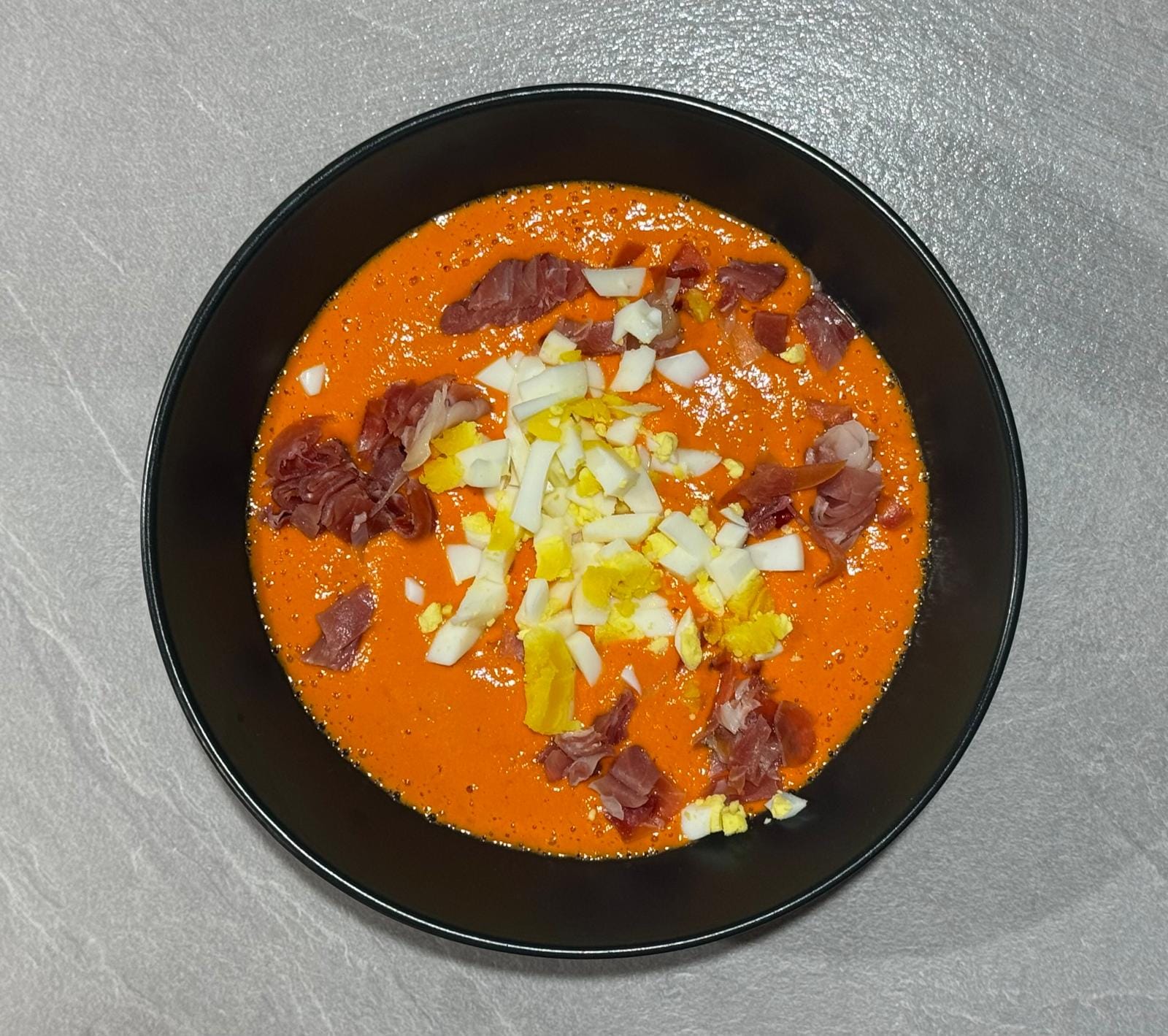
Salmorejo Cordobés
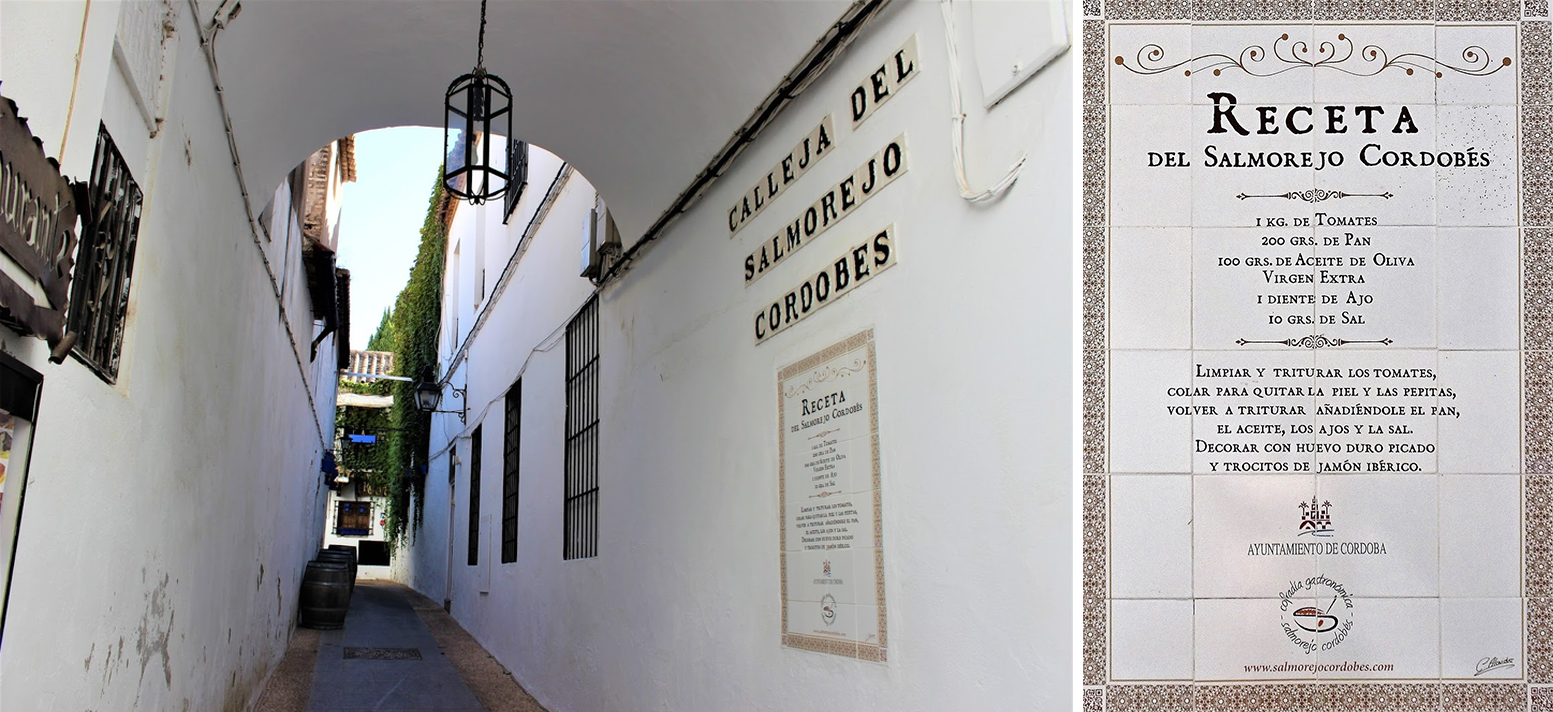
This recipe is other than a secret. It is literally set in stone in the city of Cordoba, Spain. I religiously follow what it reports, and I posted it here as a page of my diary and a tribute to a piece of Andalusian tradition that conquered me from the moment I tried it.

I have so many reasons to worship the Andalusian city of Cordoba, but I’ll keep it to the one that belongs on this blog.
The original recipe is sacred, and is literally set in stone in Cordoba, Spain.
Here I am only going to add details and tested tips to it that will make it perfectly reproducible.
Salmorejo is technically a stabilized emulsion with a remarkably silky, refreshing texture. It has a luxurious consistency that depends heavily on high-speed blending — making a powerful, high-rpm blender one kitchen tool you should never compromise on.
I consider the power of the blender here a crucial factor for the final result.
The emulsion is straightforward: watery umami and sour of tomatoes fits perfectly with the kokumi and earthy notes of EVO oil and garlic.
The bread not only furtherly increases flavor persistence (kokumi) but also stabilizes the emulsion into the silky creaminess, preventing separation between the water component and oil and preserving its texture.
Salmorejo is a perfect example of how to make use of simple ingredients and create something truly delicious.
For more info on the above perception map and its flavors, you can read the linked post below
 Luca Mennoia
Ingredients / Proportions
- Tomatoes (1 kg)
- EVO Oil (100 g)
- Bread (200 g)
- Garlic (one clove)
- Salt (10 g)
The quantities above are exactly what the original recipe indicates, but I prefer to also convert them in terms of proportions with respect to the weight of tomatoes. Once you weight your tomatoes, then you have:
- 1/10 EVO Oil
- 2/10 Bread
- 1/100 Salt
The original recipe does not specify this step, but before adding garlic, I normally remove its heart to avoid an excessively pungent and overwhelming flavor.
Preparation
The following 4-step list is the literal translation of the original recipe.
- Clean and crush the tomatoes.
- Strain them to remove the skins and seeds.
- Blend/crush again while incorporating the bread, olive oil, garlic, and salt.
- Garnish the dish with chopped hard-boiled egg and diced Jamón ibérico (Iberian Ham).